
The smell of freshly baked bread has a way of bringing everyone together, doesn't it? I remember making my first loaf of artisan bread-a delightful no-knead recipe that transformed our kitchen into a cozy bakery. With just a few pantry staples and a sprinkle of patience, you, too, can create this beautifully golden, crispy loaf that boasts an airy interior, all without the fuss of kneading or complex instructions. Whether you're hosting a family dinner or simply looking to elevate your regular meals, this homemade artisan bread will impress without requiring a culinary degree. It's customizable, beginner-friendly, and incredibly satisfying to slice into after a warm bake. Join me as we dive into this effortless baking experience that will leave your home filled with irresistible aromas and your taste buds craving more!
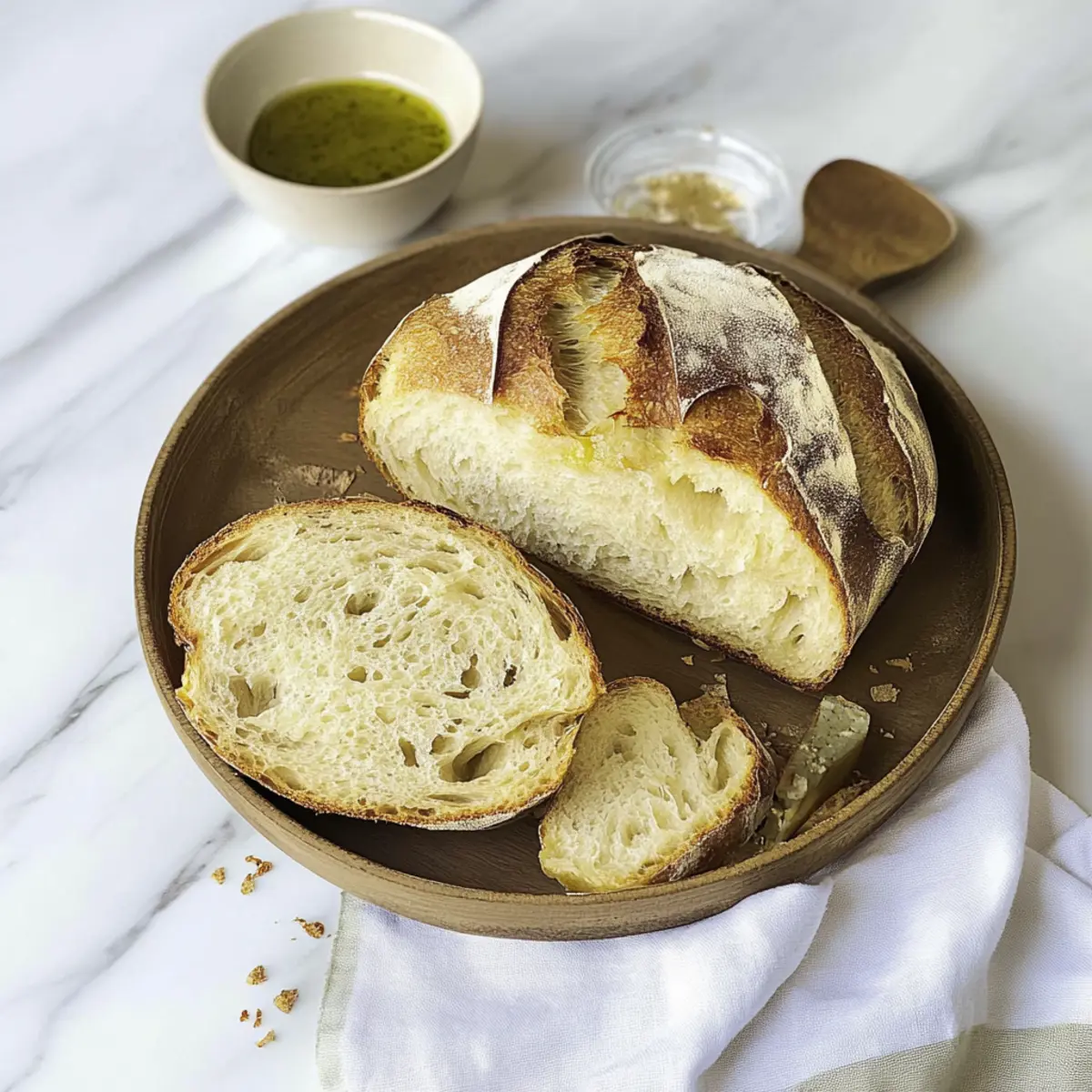
Why Choose Homemade Artisan Bread?
Simplicity: Making homemade artisan bread is a breeze with this no-knead method, perfect for both beginners and seasoned bakers.
Flavorful Results: The combination of a crispy crust and soft, airy interior delivers that bakery-quality taste right at home.
Quick Options: With both quick and professional rising methods, you can whip up a loaf in just 2 hours!
Customizable: Feel free to experiment with flavors, adding herbs or cheese to suit your palate.
Heartfelt Aromas: Picture the inviting scent of freshly baked bread wafting through your kitchen, bringing everyone together.
Crowd Pleaser: This delightful bread is sure to impress your family and friends, making every meal extraordinary.
Homemade Artisan Bread Ingredients
• Discover the simple components that make this recipe special!
For the Dough
- All-Purpose Flour - Provides structure and necessary gluten for the bread; you can swap it for whole wheat flour for a heartier option.
- Instant Yeast - Acts as the leavening agent for quick rising; can be replaced with active dry yeast, just activate it with warm water and a pinch of sugar first.
- Salt - Essential for enhancing flavor and controlling yeast activity; no substitutes recommended as it is vital for taste.
- Warm Water - Hydrates and activates the yeast; ensure it’s between 100°F to 110°F for best results, and tap water usually works perfectly.
For Flavor Enhancements
- Dried Herbs (Optional) - Adding herbs like rosemary or thyme gives the bread additional flavor and aromatics.
- Cheese (Optional) - Incorporate shredded cheese for a richer taste, turning your loaf into a cheesy delight.
Enjoy this journey into creating your very own homemade artisan bread, where every ingredient counts towards building something truly wonderful!
How to Make Homemade Artisan Bread
Prepare the Dough:
In a large bowl, combine the all-purpose flour, instant yeast, and salt. Gradually add warm water (between 100°F to 110°F) while mixing until a sticky dough forms.Select Your Rising Method:
For the Quick Version: Cover the dough and let it rise in a warm place for 2 hours.
For the Pro Version: Allow a 30-minute rise, performing stretch and folds every 30 minutes for 1 hour, then let it rise undisturbed for 1 additional hour.Shape the Dough:
Gently transfer the risen dough to a floured surface, shaping it into a round loaf without kneading. Be careful to retain the air bubbles for a light texture.Final Rise:
Place the shaped loaf onto parchment paper. Cover and let it rise for an additional 30-60 minutes until it has expanded nicely.Bake the Bread:
Preheat your oven to 450°F and score the top of the loaf with a sharp knife. Bake for 40 minutes covered (using a Dutch oven), or on a baking sheet with boiling water underneath. Reduce the heat to 425°F and bake uncovered for another 15 minutes until golden.Cool Down:
Once baked, allow the bread to cool for 30 minutes before slicing. This resting period enhances the texture and flavor, making it easier to slice.
Optional: Serve warm with butter or your favorite dipping oil for a delightful treat.
Exact quantities are listed in the recipe card below.
How to Store and Freeze Homemade Artisan Bread
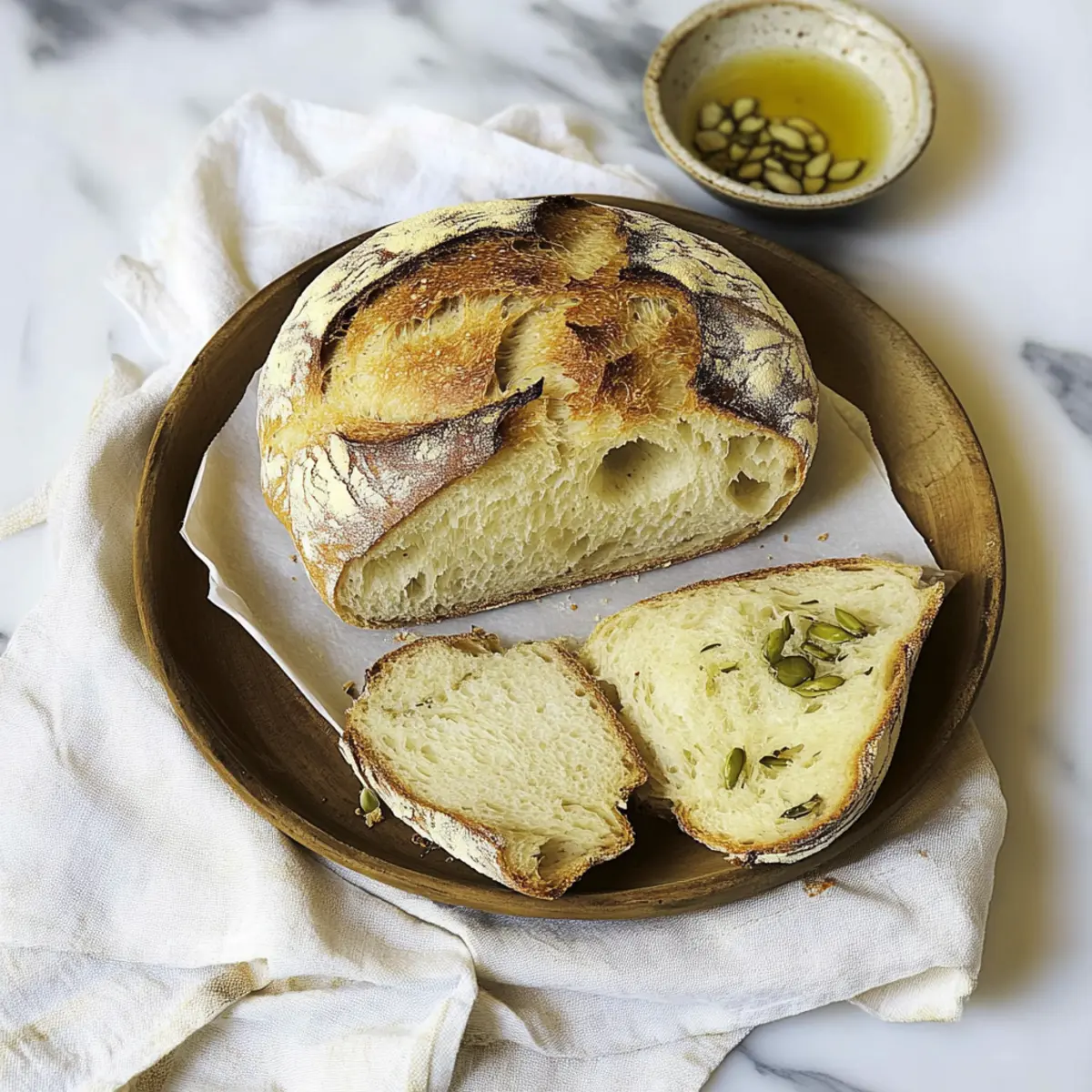
Room Temperature: Keep your artisan bread in a paper bag at room temperature for up to 2 days to maintain its crusty exterior and soft interior.
Freezer: For longer storage, wrap the bread tightly in plastic wrap and aluminum foil before freezing. It can last for up to 3 months, ensuring you have homemade artisan bread on hand anytime!
Reheating: To restore freshness, bake frozen slices in a preheated oven at 350°F for about 10-15 minutes, or until warmed through. This will help revive the crust’s crispiness.
Airtight Storage: If storing in an airtight container, note that the crust may soften. Enjoy your homemade artisan bread fresh for the best flavor!
Make Ahead Options
These Homemade Artisan Bread options are perfect for meal prep enthusiasts! You can prepare the dough up to 24 hours in advance; simply mix the ingredients and allow it to rise in the refrigerator instead of a warm place. This slow fermentation enhances flavor while making it convenient to bake fresh bread later. When you’re ready to bake, just transfer the dough to a floured surface for shaping and let it rest at room temperature for about 30-60 minutes. Follow the baking instructions as detailed, and you’ll have a delightful loaf that's just as delicious as if it had been made fresh that day!
Expert Tips for Homemade Artisan Bread
- Mind the Temperature: Use warm water between 100°F to 110°F to activate the instant yeast properly. Too hot or too cold can hinder the rise.
- Watch the Dough: Keep it stickier than typical bread dough; this high hydration helps create that airy texture.
- Avoid Overworking: Handle the dough gently during shaping to preserve those precious air bubbles for a light, fluffy loaf.
- Steaming Method: For a crispy crust, make sure to introduce steam in the baking process-use a Dutch oven or place boiling water underneath the bread.
- Fresh Ingredients Matter: Always check the freshness of your yeast; expired yeast won’t rise effectively and can ruin your homemade artisan bread experience.
Variations & Substitutions for Homemade Artisan Bread
Feel free to get creative with this recipe and personalize your artisan bread to suit your tastebuds!
Whole Wheat: Substitute all-purpose flour with whole wheat flour for a heartier, nuttier flavor and added nutrients. This not only enhances health benefits but brings a lovely depth to your bread.
Herbed Delight: Add 1-2 tablespoons of your favorite dried herbs like rosemary or thyme to the flour mixture for an aromatic infusion. Imagine the delightful fragrance filling your kitchen!
Cheesy Twist: Mix in 1 cup of shredded cheese, like cheddar or parmesan, before baking for a deliciously cheesy loaf. This variation will have your family clamoring for more!
Seeds & Nuts: Sprinkle in a handful of sunflower seeds, sesame seeds, or chopped nuts into the dough for added crunch and flavor. This not only enhances the texture but also creates a visual treat.
Gluten-Free: For a gluten-free option, use a gluten-free all-purpose flour blend that includes xanthan gum to ensure the right texture. You can enjoy the same delicious bread without compromising on dietary needs.
Sweet Version: Add 2 tablespoons of honey or maple syrup to the dough for a subtle sweetness. This sweet twist is perfect for breakfast or enjoying with jam!
Spicy Kick: Add crushed red pepper flakes or diced jalapeños to the mix for a spicy version that elevates your favorite meals. The heat will surprise you in the most delightful way!
Brioche Style: Incorporate an egg and 2 tablespoons of melted butter into the dough for a richer, brioche-like loaf. This rich texture turns your artisan bread into a special treat for any occasion.
What to Serve with Homemade Artisan Bread?
The perfect accompaniment can turn your warm, crusty loaf into a full dining experience that delights every palate.
- Creamy Tomato Soup: Its rich, velvety texture pairs beautifully with the crusty artisan bread, making each bite comforting.
- Herbed Olive Oil: A simple dish that enhances the bread's flavor; dip warm slices to soak in the fragrant, savory oil.
- Cheese Platter: Offer a variety of cheeses like aged cheddar and brie-a delightful contrast to the bread's rustic crust.
- Fresh Salad: A light, zesty salad with citrus dressing can balance the heartiness of the bread, creating a fresh dining experience.
- Antipasto Skewers: These colorful skewers of cured meats and veggies complement the bread, inviting bold flavors that excite the senses.
- Honey Butter Spread: The sweet, creamy mixture lends a delightful contrast to the artisanal loaf; spread it generously for a treat!
Enjoy creating tasty combinations that make your homemade artisan bread the star of your table!
Homemade Artisan Bread Recipe FAQs
How do I choose the right flour for homemade artisan bread?
For this recipe, all-purpose flour is ideal as it provides the necessary structure and gluten for the bread to rise beautifully. If you desire a heartier loaf, you can substitute it with whole wheat flour. Just keep in mind that it may alter the texture slightly.
What's the best way to store homemade artisan bread?
To keep your artisan bread fresh, store it in a paper bag at room temperature for up to 2 days. This method preserves the crust’s crispiness. If you want to extend storage, wrap the bread tightly in plastic wrap and aluminum foil, and freeze it for up to 3 months.
Can I freeze homemade artisan bread? How do I do it?
Absolutely! You can freeze your artisan bread to enjoy it later. Once the bread has cooled completely, wrap it tightly in plastic wrap and then aluminum foil to prevent freezer burn. For optimal texture, toast slices directly from frozen in a preheated oven at 350°F for about 10-15 minutes.
What should I do if my dough doesn't rise?
If your dough isn't rising, check the yeast’s freshness first-expired yeast is often the culprit. Ensure you’re using warm water (between 100°F to 110°F) to activate the yeast properly. If the dough still doesn’t rise, try placing it in a warmer spot, like near a heater or an oven turned off with the light on.
Are there any dietary considerations I need to keep in mind with this bread?
Yes! This recipe contains gluten due to the all-purpose flour. If you have a gluten intolerance or celiac disease, you can use gluten-free all-purpose flour with xanthan gum. Additionally, check to ensure any flavor enhancements, like cheese or herbs, don't conflict with dietary restrictions.
How can I customize the flavors of my homemade artisan bread?
The possibilities are endless! Feel free to add your favorite dried herbs, spices, or cheeses to the dough. A tablespoon of rosemary or a cup of shredded cheese can elevate the flavor beautifully, making this bread uniquely yours. Enjoy experimenting!
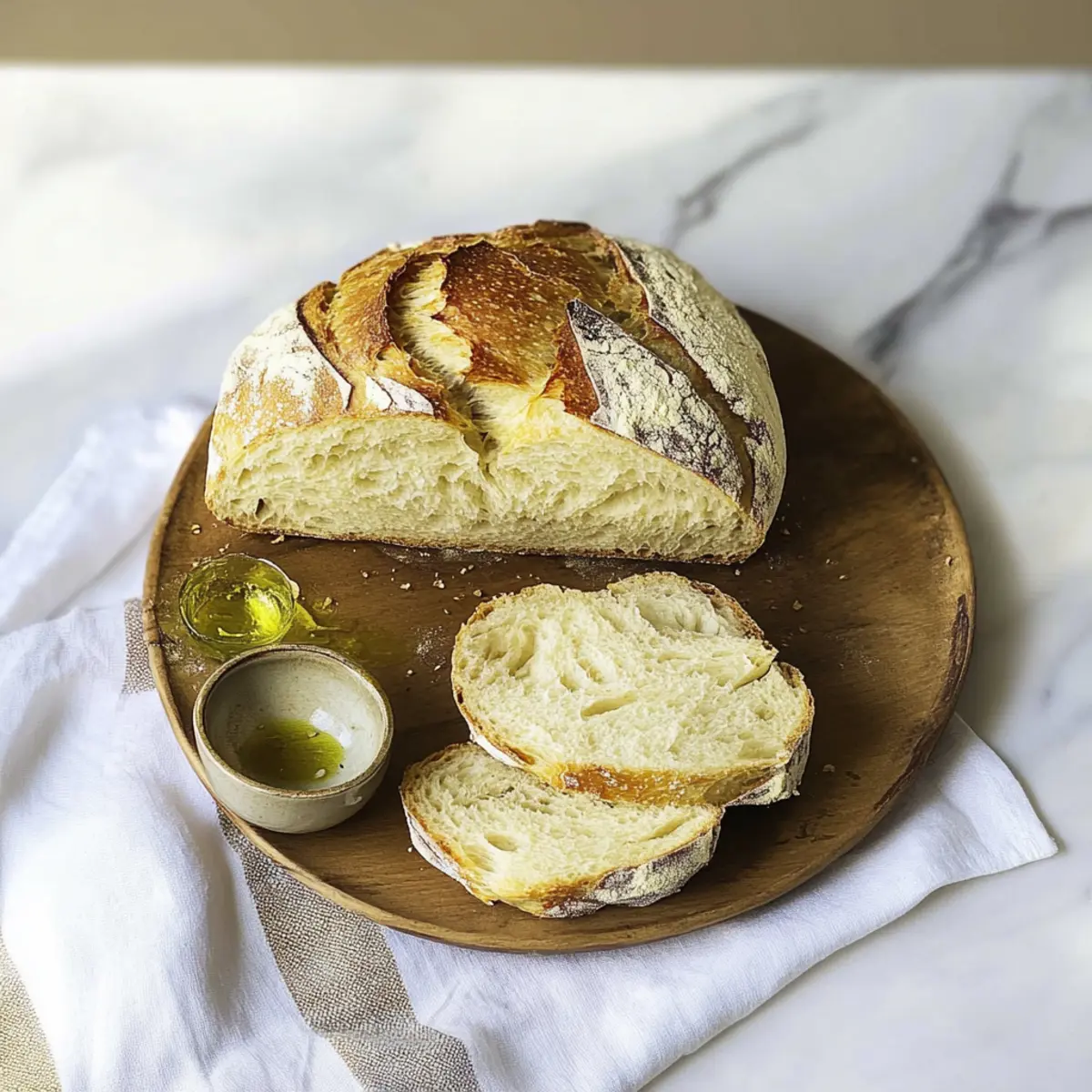
Homemade Artisan Bread: Easy Recipe for Perfectly Crispy Loaf
Ingredients
Equipment
Method
- Combine flour, yeast, and salt in a large bowl. Gradually add warm water while mixing until a sticky dough forms.
- For the quick version, cover and let rise in a warm place for 2 hours.
- For the professional version, let rise for 30 minutes, perform stretch and folds every 30 minutes for 1 hour, and then let rise undisturbed for another hour.
- Transfer the risen dough to a floured surface and shape into a round loaf without kneading.
- Place the shaped loaf on parchment paper, cover, and let rise for another 30-60 minutes.
- Preheat oven to 450°F, score the top of the loaf, and bake for 40 minutes covered, then reduce heat to 425°F and bake uncovered for an additional 15 minutes.
- Allow the bread to cool for 30 minutes before slicing.
Leave a Reply